MENU

k

k

r

r

o

o

n

n

o

o

l

l

o

o

g

g

e

e

r

r

n

n

a

a

TYPE

UI, UX, Branding

YEAR

2025

ABOUT

This project was our graduation project in Digital Design at Yrgo. We collaborated with Kronologerna, a newly founded dental laboratory entering the Swedish market without any existing visual identity.


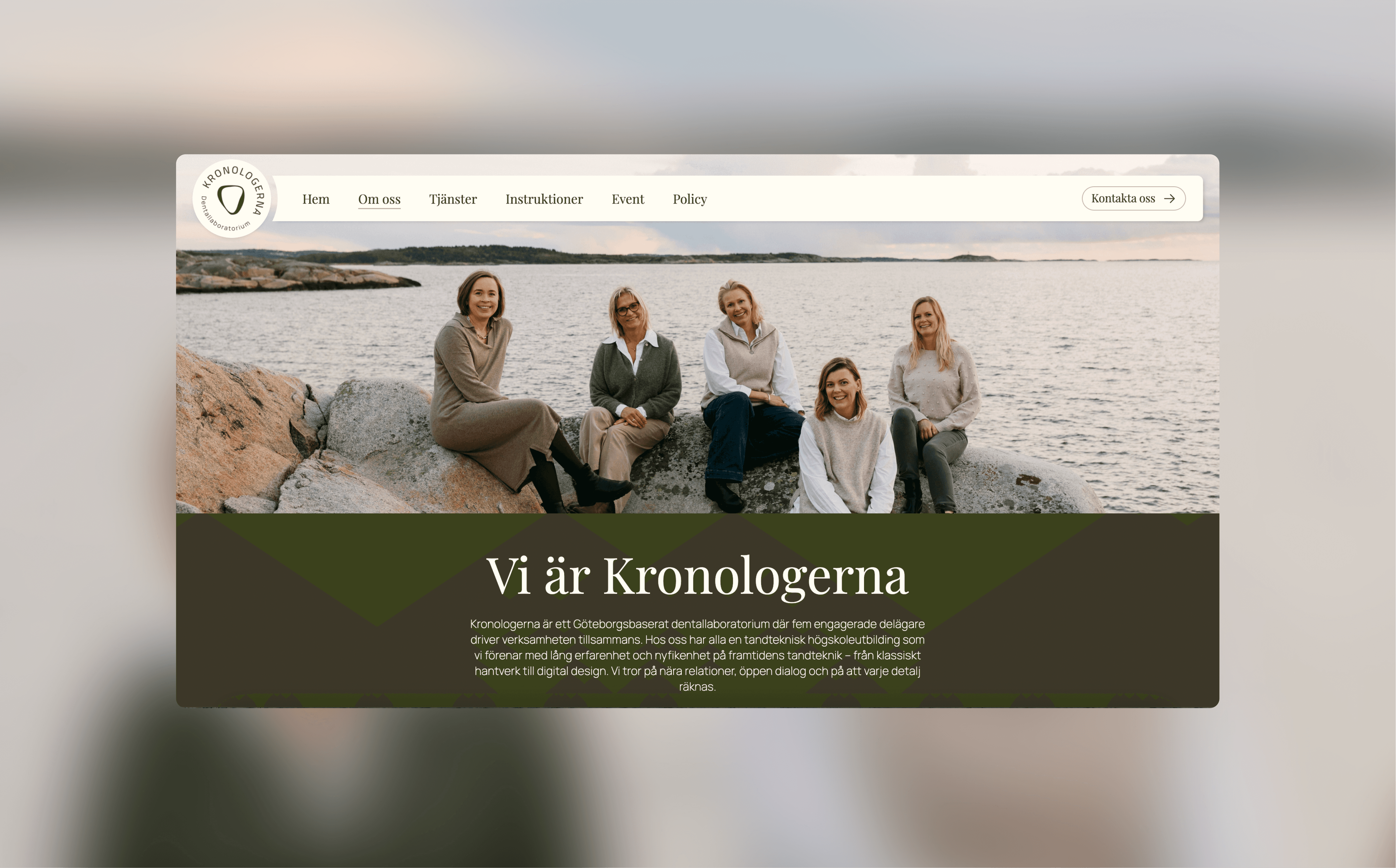
The goal was to create a complete brand identity, including logo, color palette, typography and visual guidelines and to design and build a website that reflects the brand and supports the company long-term.


Our project was guided by two main research questions, what does a newly established dental laboratory need in order to stand out in a traditionally conservative industry & what functionality and content does a dental laboratory require on its website to support and streamline its daily workflow?


The founders, five dental technicians starting their own practice, wanted to position themselves as innovative, slightly rebellious and community-oriented. They also aimed to move away from the typical “clinical blue” associated with the dental industry and instead create a warmer, more inviting and environmentally conscious expression.


The website needed to serve not only as a presentation platform, but also as a practical tool where the team could independently manage content such as events and updates.

SOLUTION

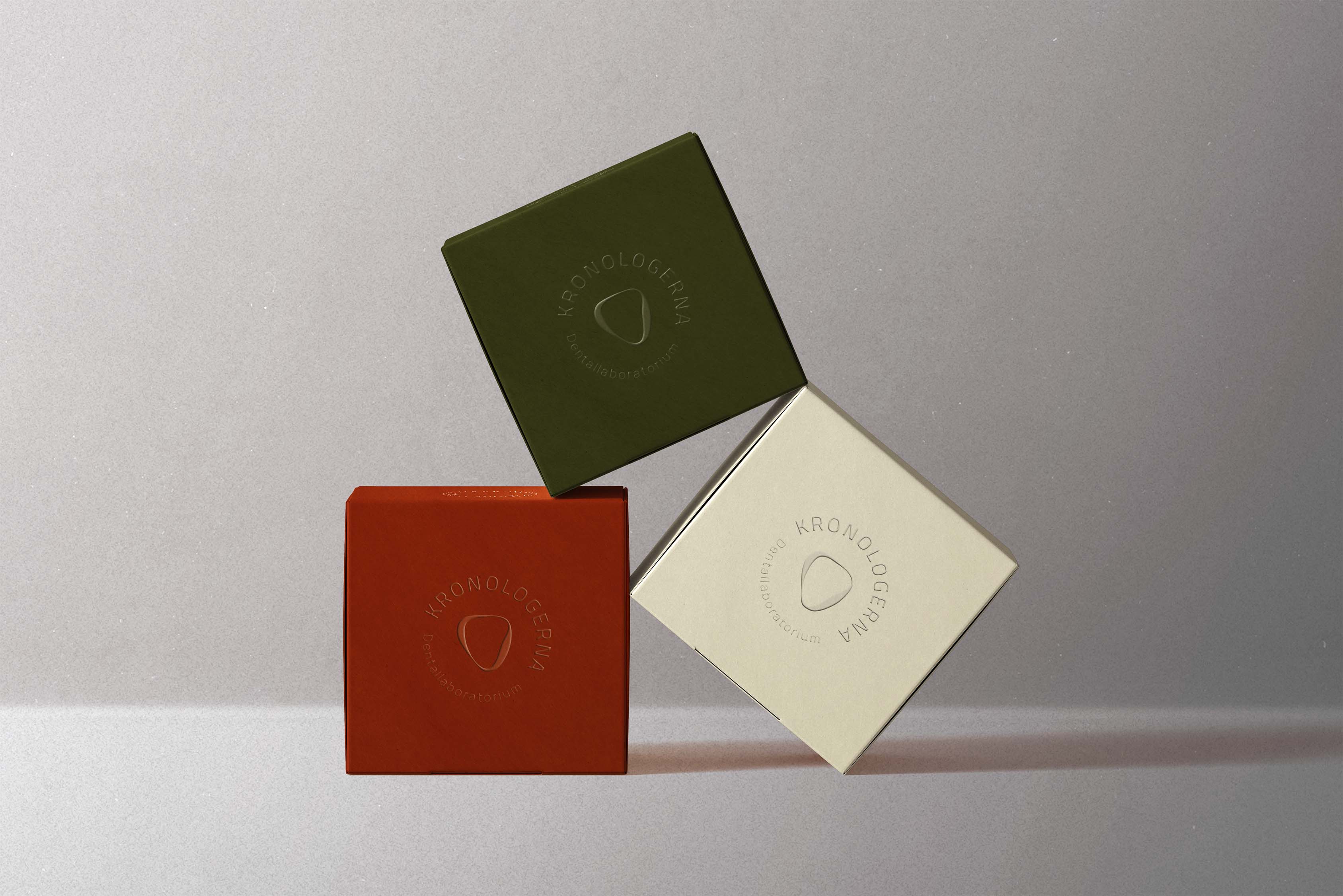
We created a brand identity that balances professionalism with warmth and subtle playfulness. The color palette combines earthy greens and beige tones with a contrasting rust-red accent, reinforcing both sustainability and approachability while clearly differentiating the brand from competitors.


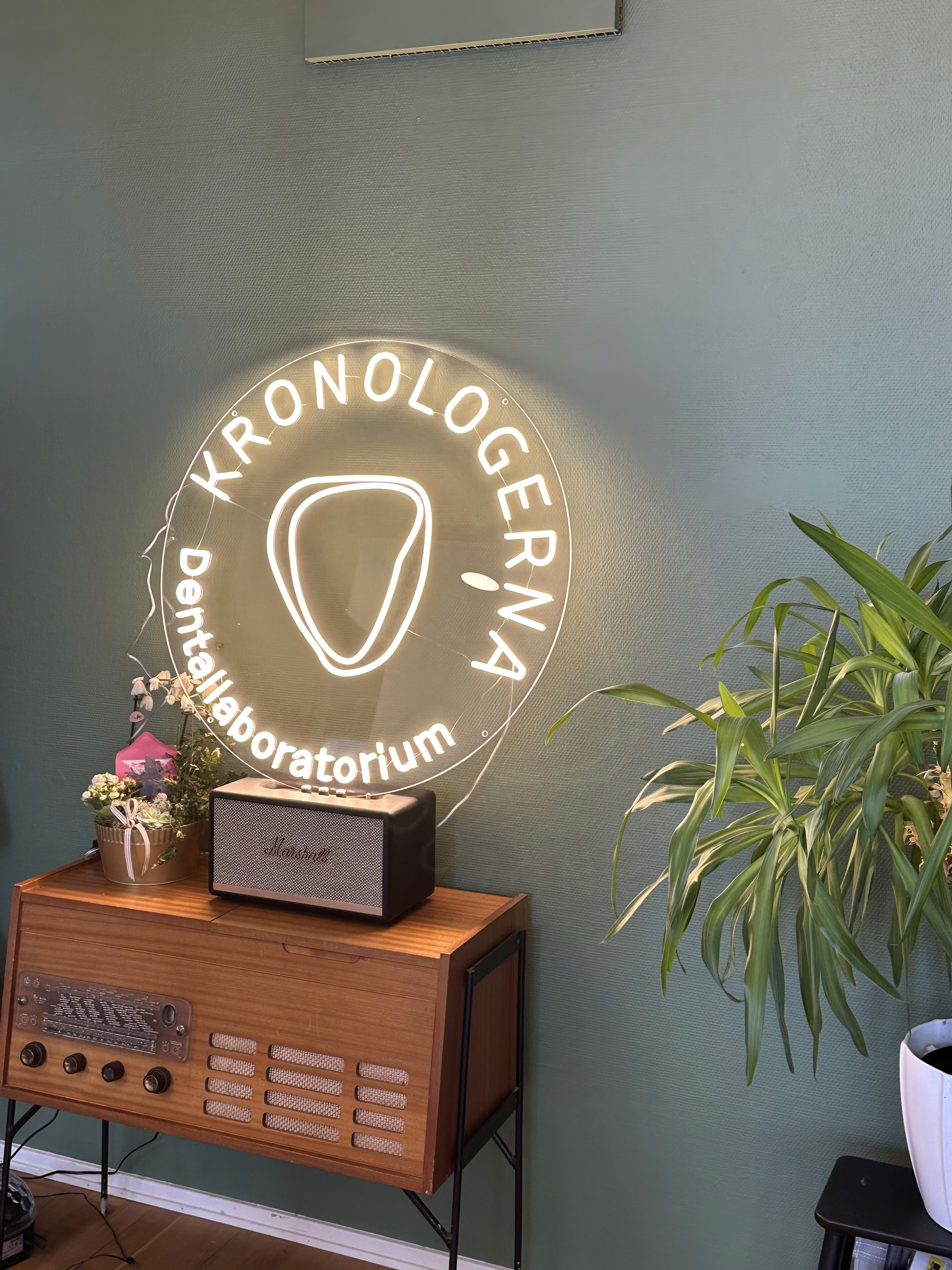
The logo was designed as a simplified emblem, suitable for use as a physical stamp, aligning with the company’s ambition to reduce unnecessary printed materials such as stickers. The symbol is intentionally abstract, it suggests a tooth without being immediately literal, creating curiosity while maintaining clarity in context.


The website was designed and built in Figma and Webflow, focusing on strong visual hierarchy, generous imagery and a modern, inviting layout. Playful elements, such as the curved slogan resembling a smile and a characterful footer, add personality without compromising usability. A CMS structure was implemented to allow the client to easily manage events and updates independently.

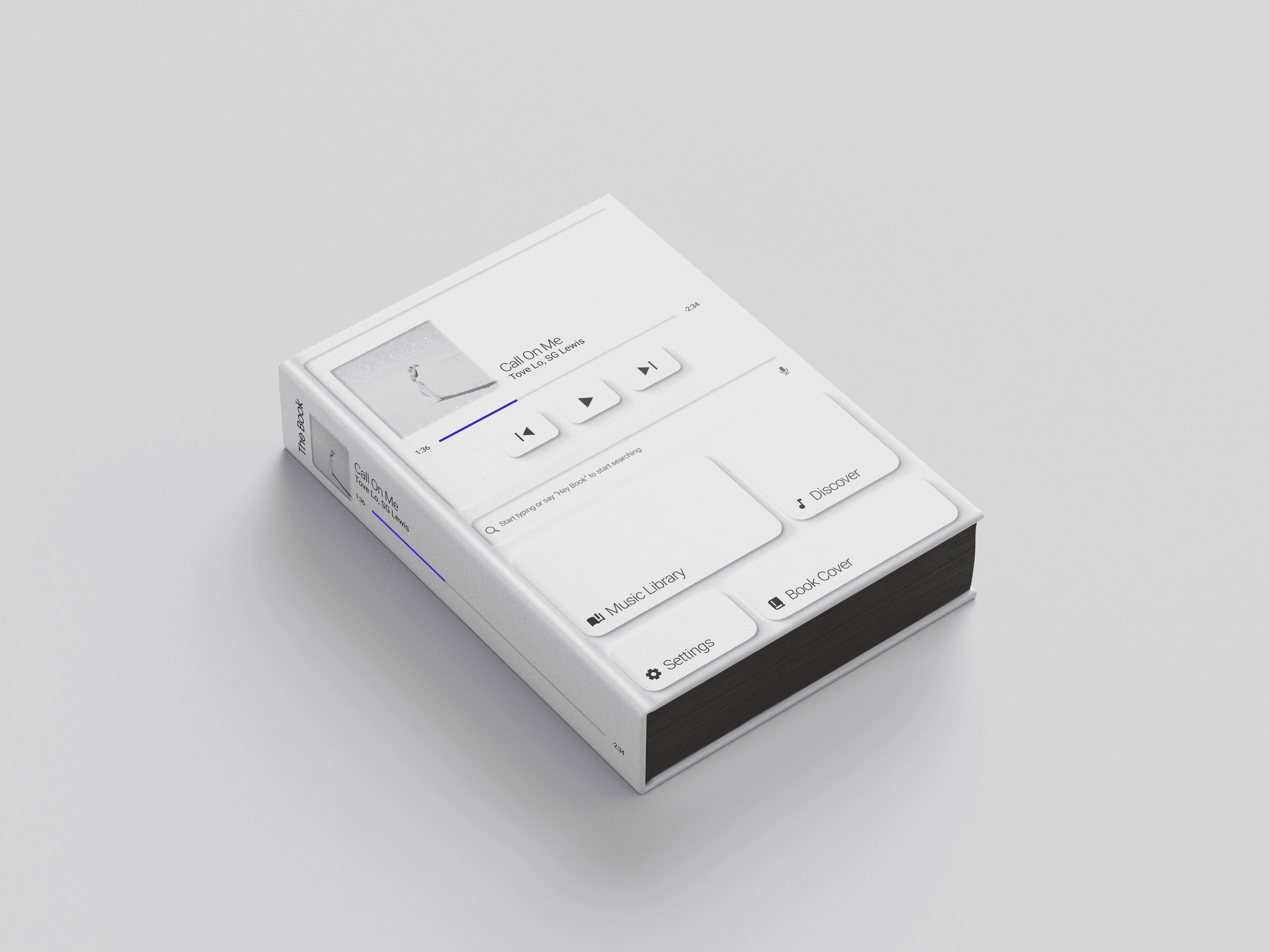
The Book is a smart home product designed as a decorative object that doubles as a music player. Using voice control and AI, it blends seamlessly into your home without disrupting your space. The Book can recognize your music preferences and suggest new tracks based on your taste.

In "Book Mode," it can display different covers, and when you want to interact with it, its design mimics the inside of a book with a paper-like texture, creating a cohesive and organic feel throughout the product.

PROCESS

The project began with workshops and in-depth discussions with the founders to define brand values, positioning and desired associations. Based on these insights, we developed moodboards and stylescapes exploring different visual directions before narrowing down a cohesive identity.


Wireframes were created early to establish structure, hierarchy and user flow before applying visual design. Industry research revealed that many dental laboratories lack strong digital presence, which created an opportunity to stand out through thoughtful branding and a well-designed website.


The logo development went through several iterations. Early concepts contained more detailed elements, but through feedback and refinement we simplified the form to increase versatility and scalability.


We conducted UX testing through Maze to evaluate how the brand was perceived without context. The results helped us adjust visual elements to better communicate the intended values of innovation, warmth and approachability.


Throughout the project, we worked iteratively between Figma and Webflow, refining both design and implementation. The final outcome is a cohesive brand and digital platform that positions Kronologerna as a modern and forward-thinking player in a traditionally conservative industry.

I used the iOS 18 design system as the foundation for my project, incorporating key components such as widgets to maintain a familiar and intuitive user experience. This provided a solid starting point for building a cohesive interface.

After establishing the design system base, I created a comprehensive variable system for colors, typography, spacing, and other design elements. This ensured consistency throughout the interface while allowing for customization to match the product's unique identity.

I also prioritized accessibility by implementing WCAG standards throughout the whole design.


I conducted user testing through Maze to validate design decisions and gather feedback on the interface. This helped identify pain points and opportunities for improvement in the user experience.

The design process focused on creating a product that feels like a natural part of the home environment rather than another tech gadget, balancing technological functionality with aesthetic appeal.

c

c

o

o

n

n

t

t

a

a

c

c

t

t